Mga Kabuuang Pageview

Martes, Abril 14, 2015

Geologist claims Jesus burial breakthrough


The James Ossuary was on display at the Royal Ontario Museum from 2002-2003. Image Credit: Paradiso

Geoarcheologist Arye Shimron and filmmaker Simha Jacobovici believe they have found the tomb of Jesus.

The two researchers claim to have been able to establish a firm connection between the controversial James Ossuary - a burial box discovered in 2002 with an inscription referencing the burial of Jesus - and the 'Jesus Family Tomb', a long-disputed site discovered in 1980 in Jerusalem's East Talpiot neighborhood.

Shimron and Jacobovici maintain that their findings prove that Jesus was buried in Jerusalem alongside nine other people including his alleged wife and son.

The James Ossuary attracted worldwide attention when it was unearthed over a decade ago due to inscriptions on its surface that included references to "Jesus, son of Joseph", "Maria","Joseph" and perhaps most controversially of all, "Judah, son of Jesus."

Hollywood director James Cameron of "Titanic" fame even produced a documentary about the discovery called "The Lost Tomb of Jesus" which was broadcast back in 2007.

Now the controversial ossuary is making headlines once again after geoarchaeologist Arye Shimron was granted access to the box and took the opportunity to take samples from under its patinas.

After running 200 different tests on samples from several different ossuaries he was able to conclude that the James Ossuary appeared to match the unique chemical signature of the Talpiot tomb.

"This find illustrates that the James Ossuary is authentic and the Jesus Family tomb indeed belongs to the family of Jesus of Nazareth," said Jacobovici.

The pair's findings however have been met with an unsurprising degree of skepticism and there is doubt over whether such a discovery could ever be truly recognized even if it did turn out to be true.

"If in fact Jesus’s tomb is found, the procedures would be no different than the discovery of any other tomb," said James Tabor from the University of North Carolina.

"But in the case of Jesus everything changes, because he is such a lightning rod figure for so many people – because if you find the bones of Jesus in a tomb then he did not rise from the dead."

Source: Jerusalem Post

2015 Attractive & Beautiful Volleyball Players in the Philippines


Patok na patok ngayon ang larong volleyball sa Pilipinas. Iba ang arrive ngayon ng nasabing sports. Kaugnay dito, bukod sa nakakapanood tayo ng mga magagandang laro, nakakakita rin tayo ng mga kapita-pitagang mga volleyball players na naglalaro sa UAAP, NCAA, Shakey’s V- League, Philippine Superliga at iba pa. 

Nakaka-engganyo rin kasing manood ng laro kung may nakikita tayong mga binibini na bukod sa mahusay nang maglaro ‘e cute at maganda pa. 

Kaya, naglagay tayo ng list ng mga volleyball players na aktibong naglalaro sa ngayon na magaganda. ‘Yung tipong gaganahan kang manood dahil nawiwili ka sa cute nilang mukha. Heto ang napipisil ko at isinama sa aking listahan. Pinagbatayan ko rin ang pangmalas ko nung makita ko ang ilan sa kanila sa personal. Na sadyang malakas ang charm at masta-starstruck ka talaga. 


‘Yun nga lang, not in particular order. Here’s the list of 2015 Attractive & Beautiful Volleybelles Players in the Philippines.

( Note: Ongoing  parin ang pananaliksik at pagkilatis ng mga cute na volleybelles sa ating bansa na naglalaro sa mga liga,para madagdag sa listahang ito. :) Nota: Sa lahat ng may-ari at pinagkunan ng larawan, kayo po ay kinikilala at binibigyan ng kredito para sa blog na ito. maraming Salamat po. 


Victonara "Ara"  Galang (De La Salle Lady Spikers/ UAAP)


Michelle Gumabao (Philips Gold Lady Slammers /PSL) 


Angeli Araneta ( Foton Tornadoes/ PSL)


Mika Reyes (De La Salle Lady Spikers/ UAAP)


Alyssa Valdez ( Ateneo Lady Eagles/ PLDT/ Shakey’s V-League)


Rachelle Ann Daquis ( Petron Blaze Spikers/ PSL/ Army Troopers- V-League)


Trish Santos ( UST Golden Tigresses/UAAP)


Cyd Demecillo ( DLSU Lady Spikers/ UAAP)


Jaja Santiago (NU Lady Bulldogs/ PLDT /Shakey’s V-League)


Amanda Villanueva (Adamson Lady Falcons/ UAAP)


Cha Cruz ( Shopinas.com Lady Clickers, PSL/ Meralco ( Shakeys V-League)


Jema Galanza ((Adamson Lady Falcons/ UAAP)


Dindin Santiago-Manabat ( Petron Blaze Spikers/ PSL/ Arny Troopers- V-League)


EJ Laure (UST Golden Tigresses/ UAAP)


Denise " Denden" Lazaro (PLDT/ Shakey's V-League)


Pamela Lastimosa (UST Golden Tigresses/ Foton Tornadoes, PSL)


Carmela Tunay  ( UST Lady Tigresses/ UAAP/ Cignal HD/ PSL)


Ivy Remulla ( Foton Tornadoes/ PSL)


Aby MaraƱo ( PSL Petron Balze Spikers/ V-League- Meralco)

Sabado, Pebrero 28, 2015

Scientists discover gigantic black hole


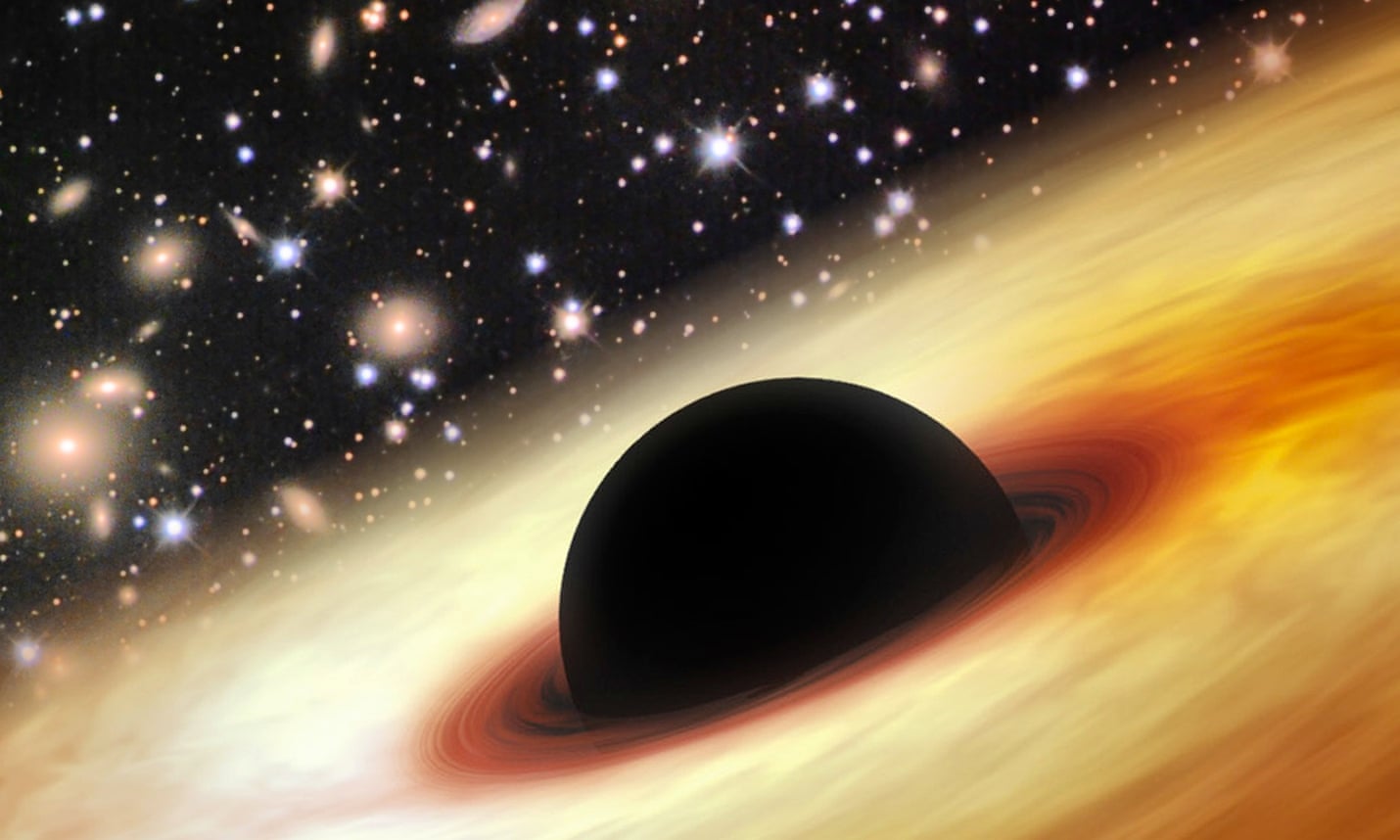
Artist’s impression of a super massive black hole at the center of a distant quasar. Scientists believe they have discovered one whose mass is 12 billion times that of our sun’s. Photograph: Zhaoyu Li/Shanghai Astronomical/Peking University/PA

Scientists name new ‘object’ SDSS J0100+2802 and say it is 12.8bn light years from Earth and was formed just 900m years after the Big Bang

A monster black hole powering “the brightest lighthouse in the distant universe” has been discovered that is 12bn times more massive than the sun, scientists have revealed.

The extraordinary object is at the centre of a quasar - an intensely powerful galactic radiation source - with a million billion times the sun’s energy output.

For years the nature of quasars, discovered in 1963, remained a mystery. Today scientists believe they are generated by matter heating up as it is dragged into supermassive black holes at the centre of distant galaxies.

The new object, named SDSS J0100+2802, is 12.8bn light years from Earth and was formed just 900m years after the Big Bang that gave birth to the universe.

Astronomers cannot explain how such an enormous black hole could have formed so early in cosmic history, soon after the first stars and galaxies emerged. 


Dr Fuyan Bian, from the Australian National University, a member of the international team, said: “Forming such a large black hole so quickly is hard to interpret with current theories ...

“This black hole at the centre of the quasar gained enormous mass in a short period of time.”

The quasar, the brightest ever detected in the early universe, was found after astronomers conducted a survey of distant luminous objects using data from several large telescopes around the world.

It had a “redshift” - a measurement of the stretching of light to the red end of the spectrum by the expansion of the universe - of 6.30, marking it out as a very distant and old object.

Only 40 known quasars have a redshift higher than six, the yardstick used to define the early universe boundary.
Advertisement

It was formed soon after the end of the “epoch of reionisation”, a transformative era that ended the “cosmic dark age” following the Big Bang and created the star-filled universe we know today.

Astronomers have uncovered more than 200,000 quasars dating as far back as 700m years after the Big Bang. Despite their high luminosity they are extremely faint because of their great distance and difficult to find.

Professor Xue-Bing Wu, from Peking University in China, who led the study reported in the journal Nature, said: “This quasar is very unique. We are so excited, when we found that there is such a luminous and massive quasar only 0.9bn years after the Big Bang. Just like the brightest lighthouse in the distant universe, its glowing light will help us to probe more about the early universe.”

US co-author Dr Yuri Beletsky, from the Carnegie Institution in Washington DC, said: “This quasar is a unique laboratory to study the way that a quasar’s black hole and host galaxy co-evolve. Our findings indicate that in the early universe, quasar black holes probably grew faster than their host galaxies, although more research is needed to confirm this idea.”

The quasar’s black hole dwarfs the one at the centre of our galaxy, the Milky Way, which has mass of three million suns.

• The headline of this article was amended to clarify that the black hole is 12bn times more massive than the sun, rather than 12bn times bigger.

Source: The Guardian

Sabado, Enero 24, 2015

Meet the Moranbong Band – North Korea’s Version of Spice Girls


(www.express.co.uk)


Believe it or not, North Korea’s supreme leader, Kim Jong-un, is actually a big fan of K-pop music. In fact, he’s so passionate about it that he hand-picked every member of the girl group ‘Moranbong Band’ – his country’s answer to the Spice Girls.

As a result of Kim Jong-un’s endorsement, the band has been playing sell-out gigs across the country. Their first concert was so popular that the streets of Pyongyang were apparently deserted during the broadcast. Often dressed in conservatively sexy attire – with skirts cut well above the knee and hair clipped short – the Moranbong girls have received good reviews from local critics as well.

Although the band has been around for a few years, they appeared to have fallen out of favor in late 2013. But after a six-month hiatus, they were back to performing in April 2014 to rave reviews from Korean media, thus reclaiming their status as queens of North Korea’s pop scene, and the darlings of primetime TV. Their comeback concert featured ‘colorful numbers’ such as ‘O My Motherland Full of Hope’, ‘Our Father’, and ‘We Think of the Marshall Day and Night’.

(imgarcade.com)


“The supreme commander spared time to watch the performance though he was very busy with the work to protect the destiny of the country and its people from the arrogant and reckless moves of the US imperialists and other hostile forces,” the concert host is reported to have announced. “Kim Jong-un waved back to the cheering performers and audience and congratulated the artistes on their successful performance.”


The band is believed to represent the softer, more likable face of Kim’s regime. Ethnomusicologist Donna Kwon, of the University of Kentucky, believes that the Moranbong Band represents an effort to update North Korean ‘popular’ music practices. Traditionally, the country’s top performing groups tend to be symphonies or operatic troupes, consisting of highly trained and technically skilled musicians who are also kind of frozen and stodgy. In one of their earlier concerts, they even played the theme song to the ‘Rocky’ movie series.


Several experts have stated that in North Korea art serves a political end and the Moranbong Band is no different. “North Korea has a history of regime-supported arts that in both content and form serve the state,” said Darcie Draudt, a North Korea analyst. Kim Jong-un’s predecessor Kim Jong-il had a special interest in the film industry – he saw it as a powerful ideological weapon. Experts believe that Kim Jong-un is trying to use the Moranbong Band in the same manner, as a tool to get his people to sympathise with his leadership.


It’s hard to say what the band feels about all these speculations, because the members don’t do interviews. But it is widely believed that they only exist to serve their number one fan – Kim Jong-un. “North Korean artists and musicians know their place within that system and know that to succeed within it, one does not attempt to go beyond established boundaries,” said Adam Cathcart, a China and North Korea expert.

Asteroid firestorm didn't kill the dinosaurs


Scientists believe that a giant asteroid hitting Earth would not be able to ignite a firestorm on a global scale (google image/www.telegraph.uk)


A favorite theory to explain the sudden demise of the dinosaurs 65 million years ago has been debunked by an experiment suggesting that it would have been unlikely for a giant asteroid impact to cause a global firestorm.


It is known that a massive asteroid collided with the Earth at around the same time that the dinosaurs went extinct and it was thought that the impact generated high enough temperatures to ignite vegetation around the world in a global conflagration.

However, an experiment involving a heat furnace and various items of living and non-living plant material has shown that the temperatures created by such an impact, and crucially for how long they occurred, would probably not have been great enough to ignite living vegetation on a global scale, scientists said.

“Previously, people would only have been able to speculate on whether the heat from an asteroid would have caused firestorms. We actually recreated the heat predicted from computer models of such an impact,” said Claire Belcher of Exeter University.

“We found that the living plant material that would have been close to the impact site did not ignite. If there were any firestorms, they were likely to have been localised rather than global,” Dr Belcher said.

However, a collision with an asteroid large enough to leave behind an impact crater 200km (124 miles) wide would still have caused cataclysmic damage to the global environment, throwing up enough ash, dust and debris into the atmosphere to block sunlight for many months to create a “nuclear” winter, she said.

“We’re not saying that an asteroid didn’t wipe out the dinosaurs, only that it probably didn’t cause the global firestorms that many people assumed had happened as a result of the impact,” she added.

The idea that an asteroid was responsible for wiping out the dinosaurs goes back 35 years when Luis and Walter Alvarez of the University of California, Berkeley, discovered worldwide deposits of iridium, a mineral found in meteorites, within a layer of rock formed about 65 million years ago.

About a decade later, scientists discovered a huge underground impact crater straddling the coastline at Chicxulub on the Yucatan peninsula of Mexico. The date and size of this impact crater matched the timing of an asteroid collision large enough to cause global devastation 65 million years ago, possibly resulting in a global firestorm.

However, a study published in the Journal of Geological Science found that although the temperatures nearby the impact site probably reached in the region of 500C, they lasted for only a minute, which was not enough to ignite most forms of living plant material.

In addition, the researchers found that the heat generated at greater distances, equivalent to a site as far away from Mexico as New Zealand, would have reached about 200C, but this time would have lasted for about seven minutes – long enough to ignite living trees and plants.

“This has shown that the heat was more likely to severely affect ecosystems as long distance away, such that forests in New Zealand would have had more chance of suffering major wildfires than forests in North America close to the impact,” Dr Belcher said.

“This flips our understanding of the effects of the impact on its head and means that palaeontologists may need to look for new clues from fossils found a long way from the impact to better understand the mass extinction,” she said.

Even if global firestorms did not occur, the environmental changes brought about by the asteroid impact would not have hindered the dinosaurs’ survival given that they were too large to hide away or hibernate underground, she added.

(Source: independent.com)

Sabado, Disyembre 13, 2014

ANG ULUPONG SA PAINTING NI QUEEN ELIZABETH I


Ang misteryosong ahas na lumitawsa obra ni Queen Elizabeth I. 
Alam ba ninyo ang grupong Illiminati? Isa na nga sa pinaghihinalaang kasapi rito ay ang Royal Family sapol pa noong Victorian Era o ika-16 siglo. Ating ilalahad ang isang misteryo na kung saan ay patunay umano na ang reynang si Elizabeth 1 ng Englateraen ay miyembro ng sinabing agenda at nagtataglay din ng Reptilian Bloodline.

Isang ulupong nga sa isang painting nito ang nadiskubre na kung saan ay hawak-hawak pa ng naturang reyna noon ng Inglatera. 
Iyon umano ang nakita sa orihinal na pinta ng Tudor Monarch’s. Subalit, nang matuklasan ito ng mga kinauukulan, binago nila ang nakalahad na ahas at tinatapakan ng ibang pinta. Kung kaya, ang hawak na ahas ng reyna ay pinapalitan sa isang pintor ng punpon ng mga rosas.

Subalit, sa paglipas pa ng mga panahon, ang tinapakang pintang ahas ay lumalabas pa rin at lumilitaw minsan. Ang kumukupas nang “bunch of roses” na ipinatapal sa orihinal na pintang ahas ay di mapigilang mahayag na. Anupa’t ang ulupong na lumitaw noon sa obra ay unti-unti nang lumilitaw. Ang naturang obra ay ipininta ng hindi pamosong pintor noong taong 1580’s o kaya’y noong taong 1590’s.

Ang imahe ay hindi na inilagak at naka-display sa London gallery sapol pa noong taong 1921. Ngunit, naging bahagi ang obra sa isang exhibition na may pamagat na Concealed and Revealed: “The Changing Faces of Elizabeth I” noong ika- 13 ng Marso hanggang ika-26 ng Setyembre taong 1921.

Ang ahas ay sinasabing sumasagisag umano sa karunungan o katalinuhan, pagka-maingat, at makatarungang paghatol. Ngunit, ang mas pinapaborang pagka-masagisag nito ay patungkol kay Satanas at sa mga kasalanan.

(www.independent.uk.com)

Inihayag ng art gallery naang pagpapatanggal sa nakapintang ahas ay dahil umano sa masamang simbolo nito. Anila, ang ahas ay nakapinta ng kulay itim ngunit may halong greenish blue ang kaliskis nito. 

Ipinagtataka nila kung papaano naipinta ang ahas gayung wala naman sa orihinal na plano ng pintor na ipinta ito. Ni hindi umano nito intensiyon na ipinta ang naturang reyna ng Inglatera. Ngunit, sa lumabas na X-ray photography, lumalabas na si Queen Elizabeth 1 nga ang nasa obra dahil sa gayak ng isang babae na parang reyna.


Batay pa sa masusing pagsusuri, ang naturang obra ng orihinal na pintor tungkol sa hindi kilalang babae ay hindi talaga natapos. Ipinagpatuloy lamang ito ng ibang pintor at pinalabas ang obra ng babae na siya ngang si Queen Elizabeth I. ito rin umano ang nalagay ng ahas sa obra na kung saan ay hawak ng reyna. Ang isang malaking palaisipan dito, sino ang nagpinta sa kulay itim na ahas? Malamang na isa nga ito sa sinasabing Reptilian Agenda. 

Biyernes, Disyembre 12, 2014

There are an estimated 5.25 trillion pieces of plastic floating in the world’s oceans


(JAY DIRECTO/AFP/Getty Images/The Independent )


There are an estimated 5.25 trillion pieces of plastic floating in the world’s oceans, weighing a total of nearly 270,000 tons, according to a new study.

Plastic has “spread throughout all the world's oceans” with as much in the southern hemisphere as the northern, the researchers said, adding that this was surprising as more of it originates in the north.

In an article for the Plos One journal, they said the figures were “highly conservative” and did not take into account “the potentially massive amount” that is no longer afloat.

Julia Reisser, a researcher with the University of Western Australia, told The Guardian: “We saw turtles that ate plastic bags and fish that ingested fishing lines. 

Plastic pollution
Plastic pollution: Children collect plastic to be sold and recycled at a polluted river in suburban Manila (JAY DIRECTO/AFP/Getty Images: The Independent)

“But there are also chemical impacts. When plastic gets into the water it acts like a magnet for oily pollutants.
“Bigger fish eat the little fish and then they end up on our plates. It’s hard to tell how much pollution is being ingested but certainly plastics are providing some of it.”
The article cited trade body Plastics Europe as saying 288 million tons of plastic were produced worldwide in 2012.
“Our estimate of the global weight of plastic pollution on the sea surface, from all size classes combined, is only 0.1 per cent of the world annual production,” it said.

“However, we stress that our estimates are highly conservative, and may be considered minimum estimates.
“Our estimates of macroplastic are based on a limited inventory of ocean observations … they also do not account for the potentially massive amount of plastic present on shorelines, on the seabed, suspended in the water column, and within organisms.”

 Source: The Independent